Deutsch
 English
 Español
 Magyar
 Slovenský

- GEM Drum 15 analóg dobgép
Hasonló ajánlat: Gibson Les Paul Studio GEM Sapphire Blue 1996 Elektromos gitár

...
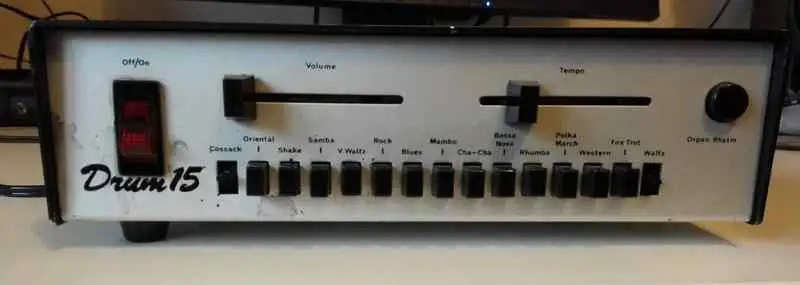
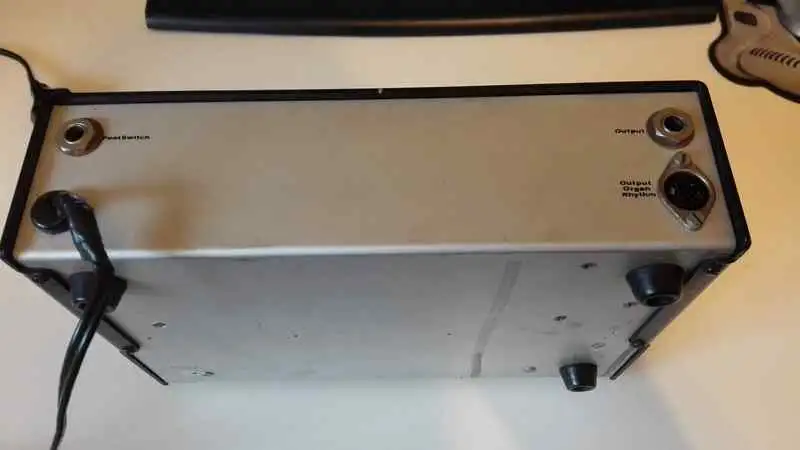
- GEM Drum 15 analóg dobgép
Elkelt: 2017.03.09. 16:58Keress aktív hirdetést
Erősen használt (használt)
ELADÓ
ELADÓ

Magyarország
Leírás
Sajnos ez már nem kapható, de talán a Kapcsolódó ajánlatok érdekelhetnek
huendeskesAnalóg dobgép! Konkrétan erről a példányról általam készített bemutató videó:
Az ár alkuképes, csere nem valószínű, de írd meg azért nyugodtan, mid van.
Állapota a korához illő, egyik lába hiányzik.. A két szélső gomb feje le van törve, de azokat is be lehet nyomni.
Átvétel:
-személyesen Budapesten. Napközben a XVI. kerületben Sashalom hévmegálló közelében, este a Keleti környékén átvehető.
-posta: előreutalással.
Részletek angolul:
This is a small analogue drum machine/ rhythm device. It is not programmable like a modern drum computer, but by pressing multiple of the locking push buttons simultaneously, a tremendous variety of additional rhythms can be created. Very unusual is that this thing doesn`t contain any ICs, i.e. even the flip- flops of the digital counters/ control logics are entirely made from germanium transistors.
main features:
15 basic rhythms; a variety of additional ones can be created by pressing multiple selection buttons simultaneously.
volume and tempo control sliders. (The tempo range is somewhat limited.)
˝organ˝ jack for modulating the volume of 2 external signals by the rhythm. I guess that this was intended to modulate the chords from an electronic organ. The signal envelopes are modulated by LDRs of 2 light bulb based opto- isolators.
completely analogue, transistorized sound generator without ICs. (2 soft droning drums, transistor noise hihats/snare, woodblock)
integrated power supply with illuminated switch (which flashes slightly dimmer during drums by the power drain of the opto- isolator light bulbs).
modifications:
the transformer wasn`t grounded and mains voltage wires almost touched the metal case =>re-wired and properly insulated. Also the bulb in one of the opto- isolators (tiny metal boxes with LDR) was burned out =>replaced.
6.3mm output jack replaced with a common cinch one
(more will likely follow later)
notes:
This thing has various trimmers to tweak the drum envelopes. Since it is analogue, likely a lot of pots can be added to control the sounds. The transistorized PCB looks interesting =>I might upgrade the case with an acrylic top or similar to make it visible. The electronics uses somewhat high voltages (18V?), which makes it questionable if sensor contacts can safely be added. The rhythms are determined by the PCB trace wiring of the switches, thus theoretically a matrix plug board could be added to make them sort-of programmable.